









posted 23rd December 2025
Are We Really Honoring The Fallen?
The Covenant of Blood and Power: An IoBN Reflection on Honour, Memory, and Betrayal
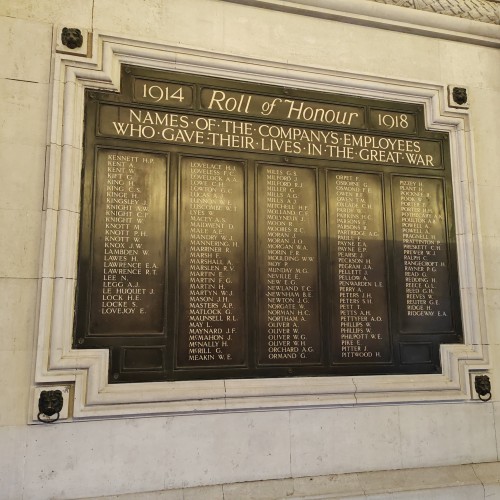
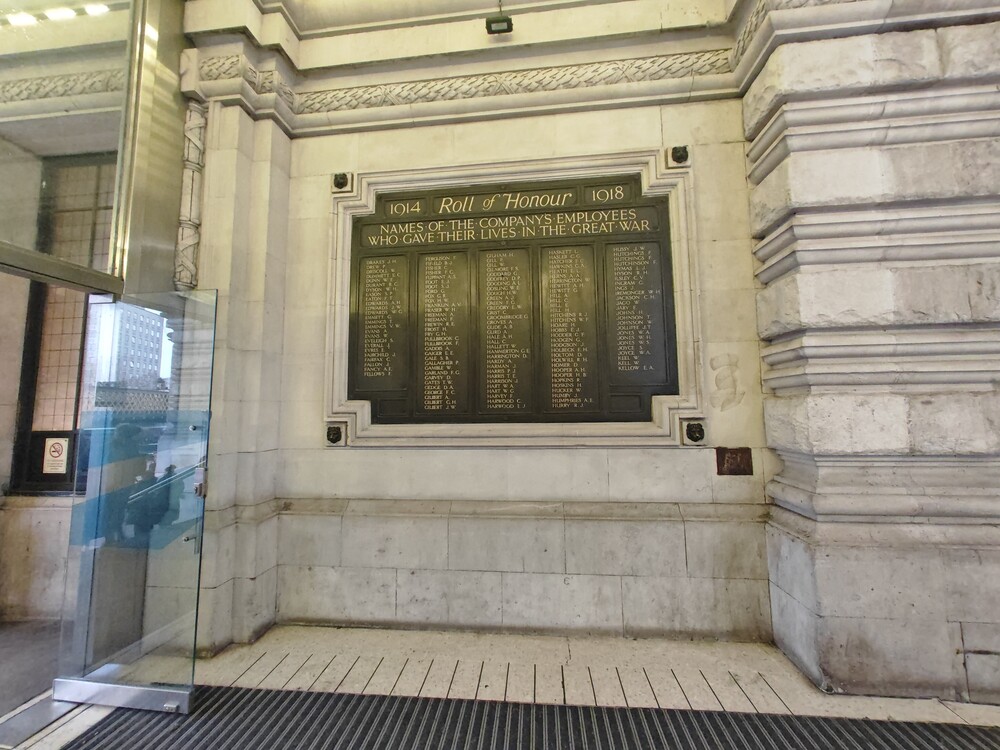
Within stone halls and civic thresholds, plaques such as these stand in quiet defiance of time. They are not ornamental relics, nor polite historical footnotes. They are covenants. Each engraved name represents a life offered not merely in defence of territory, but in defence of principle, continuity, and moral order. A Roll of Honour is, in effect, a contract between the fallen and the future-one that those in power are duty-bound to uphold.
Power, however, is rarely consistent. And therein lies the betrayal.
The men whose names are etched into bronze were summoned by states that demanded loyalty unto death. They were told-explicitly or implicitly-that their sacrifice would preserve a just order, restrain destructive forces, and prevent the repetition of catastrophe. Yet in the decades following the Second World War, many governments quietly abandoned this covenant. Former adversaries were rehabilitated without reckoning, power structures were re-assembled without moral audit, and the very ideologies, financial interests, and geopolitical mindsets that incubated global war were re-absorbed into polite governance.
This is not reconciliation; it is amnesia masquerading as pragmatism.
When governments “press reset” without truth, consequence, or structural reform, they do more than dishonour memory-they invalidate sacrifice. If yesterday’s existential enemy becomes today’s partner without confession or correction, one must ask the most uncomfortable question of all: why were millions sent to die in the first place? War cannot be retrospectively justified by convenience.
Blood cannot be rendered symbolic after it has already been spilled.
At the Institute of Black Nobility, we hold that power carries an inherited moral debt.
Authority is not self-legitimising; it is leased by history and underwritten by sacrifice. When successive governments act from greed, fear, or elite self-preservation - when they denigrate the meaning of past sacrifice through cynical alliances or hollow narratives-they forfeit moral legitimacy, even if they retain legal authority.
It is therefore reasonable-indeed necessary-to propose what many would find uncomfortable: that alongside Rolls of Honour, there should exist Rolls of Dishonour. Plaques not of marble, but of record. Designations not for the fallen, but for the faithless-those who inherited peace yet undermined its moral foundations; those who benefited from sacrifice while eroding the principles that gave it meaning.
Such a measure would not be vindictive. It would be instructive. History does not repeat itself accidentally; it repeats because its warnings are ignored by those insulated from consequence. The absence of accountability is not forgiveness-it is invitation.
These plaques remind us that sacrifice is final. Power is not. And any system that remembers the dead while absolving the dishonourable has learned nothing at all. The true purpose of remembrance is not reverence-it is restraint. When restraint fails, memory becomes hypocrisy, and honour becomes theatre.
If governments wish to invoke the fallen, they must live in a manner worthy of them. Anything less is not governance. It is betrayal.