



posted 2nd December 2025
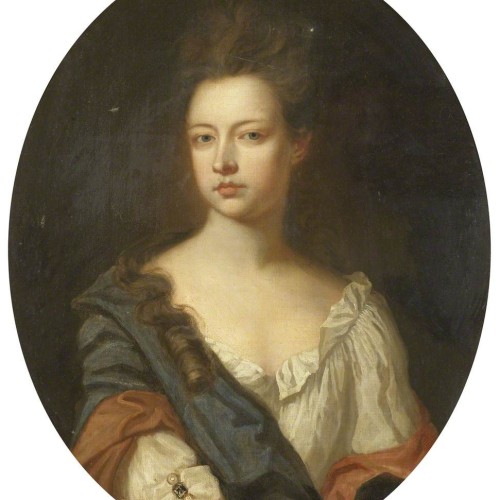
Restoration of an Obscured Legacy
Elizabeth Wilbraham: The Veiled Matriarch of British Architecture and the Restoration of an Obscured Legacy
Elizabeth Wilbraham (1632–1705) stands as one of the most enigmatic and misunderstood figures in the architectural canon—a woman whose genius, influence, and authorship were systematically obscured by the gendered constraints of her era. Emerging from an aristocratic lineage and educated within the philosophical milieu of the English Restoration, Wilbraham possessed a cultivated mastery of classical proportion, ecclesiastical design, and the emergent language of English Baroque. Scholars increasingly recognise her not merely as a patroness or dabbler, but as one of the earliest professional female architects in Britain—perhaps even the silent architect behind dozens of churches traditionally attributed to Christopher Wren and other male contemporaries.
For the Institute of Black Nobility (IBN), Wilbraham represents a profound case study in the politics of erasure: the quiet yet deliberate exclusion of brilliant individuals whose contributions threatened established hierarchies. In restoring her narrative, IBN participates in a broader intellectual duty—to recover the hidden architects, scholars, artisans, and thinkers whose work shaped civilisation but whose names were suppressed by the constraints of gender, class, and empire.
The Architectural Mind Behind the Curtain
Elizabeth Wilbraham’s architectural studies began in earnest during her Grand Tour—an education typically reserved for elite men. In Italy, the Low Countries, and across Central Europe, she encountered Palladian geometry, Dutch spatial rationality, and Germanic experimentation with form. This exposure furnished her with an intellectual arsenal unmatched by most British architects of her day.
Her substantial estate, Weston Park, is often cited as her direct architectural creation—not simply a patron’s gesture but a fully realised demonstration of her architectural authorship. Yet her influence did not end at private commissions. Many historians argue that her conceptual drawings, consultations, and mentoring of younger male architects contributed to some of the most recognisable ecclesiastical structures of the Restoration period.
In this sense, Wilbraham was both:
A theorist of space, working through manuscripts, designs, and models;
A mentor and invisible collaborator, guiding the hands of male architects permitted by society to sign their names on the blueprints.
Her condition as a noblewoman barred her from professional recognition—but it did not bar her from possessing architectural mastery.
IBN’s Philosophical Alignment with Wilbraham
The Institute of Black Nobility identifies in Elizabeth Wilbraham a figure who mirrors its own mission:
to restore the forgotten, to honour the obscured, and to reveal the intellectual structures built by those denied their rightful place in history’s spotlight.
Much like the melanated engineers, craftsmen, mathematicians, and artisans whose labour sustained the architectural grandeur of Britain, Wilbraham’s contributions were intentionally reframed as marginal, secondary, or mythic. Yet her architectural intelligence remains undeniable.
IBN honours Wilbraham for several reasons:
1. She defines the principle of unrecognised genius.
Her work demonstrates how brilliance flourishes even when society refuses to acknowledge it.
2. She stands as a corrective to architectural historiography.
Her restoration challenges the narrative that British architecture evolved solely through celebrated male figures.
3. She embodies the interdisciplinary mind that IBN champions.
Her work integrates geometry, philosophy, classical learning, and empirical observation—echoing IBN’s fusion of science, art, and nobility.
4. She reveals the interconnected systems of power, talent, and suppression.
IBN recognises that Wilbraham’s work—like the labour of Black and Brown artisans—was foundational yet uncredited, shaping the very aesthetic language of early modern Britain.
The Multicultural Infrastructure Behind Her Era
Though Wilbraham herself was an aristocrat, the monumental structures of 17th-century Britain were not built in isolation. The architectural industry depended on:
skilled Caribbean and African timber specialists in shipyards and docklands,
stonemasons whose ancestry carried geometric traditions far older than Europe’s,
artisans of colour in London’s growing mercantile districts,
enslaved and colonised labour whose economic extraction financed Britain’s building boom.
Thus, Wilbraham’s theoretical brilliance was realised through a global web of human effort, much of it melanated. IBN brings this context to the forefront—not to diminish her genius but to place it within the true multicultural ecology of architectural production.
This synthesis of noble intellect and global labour mirrors IBN’s own understanding of civilisation:
that greatness is never created alone, and history must be rewritten with all its rightful contributors restored.
How IBN Revives Elizabeth Wilbraham’s Legacy
The Institute of Black Nobility approaches Wilbraham’s life and work not merely as historical material, but as a living curriculum for a new architectural civilisation.
1. Scholarly Restoration
IBN will assemble research dossiers, digital reconstructions, and historiographical studies to reassert Wilbraham as a foundational figure in Western architecture.
2. Architectural Re-Readings
Her works will be analysed through structural physics, geometric symbolism, and quantum spatial logic—fields aligned with IBN’s interdisciplinary mandate.
3. Recognition of the Hidden Workforce
IBN will contextualise Wilbraham’s projects within the broader labour systems of 17th-century Britain, restoring the contributions of melanated artisans to the architectural record.
4. Integration into IBN’s Curriculum
Her principles of proportion, harmony, and classical revival will shape IBN’s interior design, mechanical engineering, and quantum architectural programmes.
5. Global Cultural Reclamation
By celebrating Wilbraham, IBN champions those whose brilliance defied the oppressive boundaries of their era—an ethos that strengthens the Institute’s identity and intellectual sovereignty.
Conclusion: The Architect History Tried to Forget
Elizabeth Wilbraham is not merely an architectural curiosity; she is a monument to suppressed genius.
Her story embodies the very mission of the Institute of Black Nobility: to elevate truth over tradition, scholarship over myth, and justice over historical omission.
In restoring Wilbraham to her rightful place, IBN asserts a broader truth:
Civilisation is built by many hands—brilliant, diverse, often uncredited—and it is the duty of enlightened institutions to honour them all.
Through IBN’s stewardship, Elizabeth Wilbraham’s legacy will not only be remembered but re-enthroned as one of the intellectual pillars of Britain’s architectural evolution. Her genius, once veiled, will now stand illuminated.