









posted 21st January 2026
The Teachers of the Greeks
Phoenicia and the Dawn of Global Commerce: An IoBN Reframing
Introduction
A Maritime Civilization Reimagined
In the millennia before Rome and Carthage seized the historical spotlight, a constellation of city-states along the Levantine littoral crafted the earliest enduring architecture of what we today call global commerce and cross-civilizational exchange. Though often mythologized in later Greco-Roman sources as exotic merchants or shadowy intermediaries, the Phoenicians were dynamic agents of economic innovation, navigational mastery, and cultural transmission.
Unlike sedentary agrarian high cultures such as Egypt or Mesopotamia, the Phoenicians operated from a narrow, fertile coastal corridor hemmed in by the crags of the Lebanon and Anti-Lebanon ranges. Limited arable land and increasing populations compelled these maritime communities to look outward - not merely for survival, but for opportunity.
Trade Networks and Maritime Mastery
Phoenician power was neither centralized nor monolithic. It emerged instead from networks of autonomous, oligarchic port-cities - among them Tyre, Sidon, Byblos, and later Carthage - each deeply embedded in circuits of maritime exchange that spanned the Mediterranean and reached the Atlantic shores of Iberia.
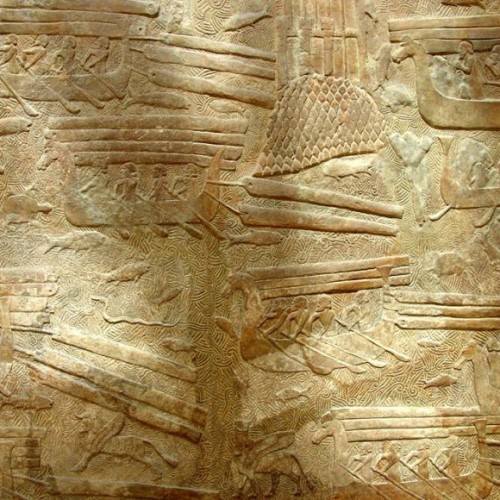
These mariners did not invent seafaring, but they perfected it, developing advanced bireme warships and merchant hulls that traversed coastal circuits with remarkable regularity. Their navigational practice relied on cabotage - keeping lands in sight while exploiting predictable winds and currents -which enabled the systematic transport of raw materials, luxury goods, and cultural ideas from port to port.
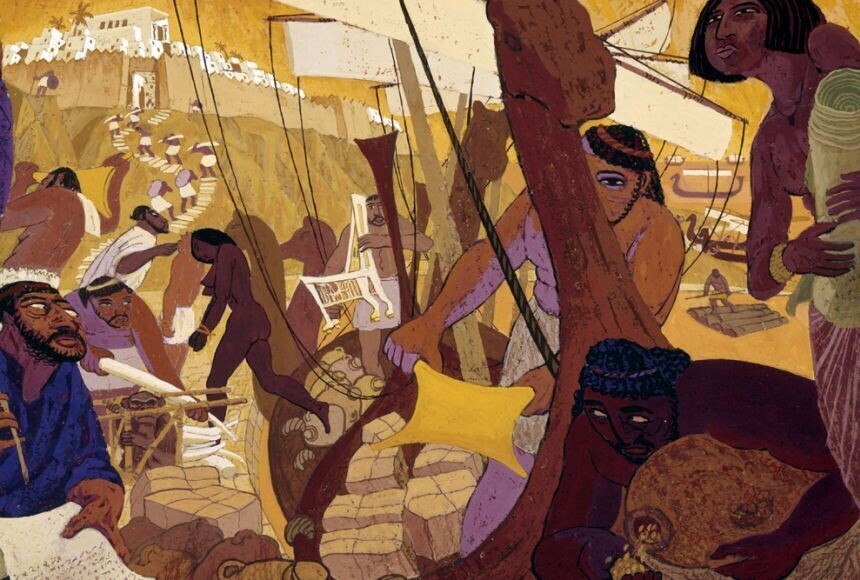
From the murex shells that yielded the famed Tyrian purple dye to cedar timbers prized across the ancient Near East, Phoenician commerce underpinned economies both near and far. These goods were not curiosities but the connective tissue of Mediterranean civilization.
Colonies, Commerce, and the Western Mediterranean
By the 9th century BCE, Phoenician traders had seeded a lattice of colonies that would become nodes in a burgeoning world-economy. From Cyprus and Crete to Sardinia, Sicily, and Cádiz, these settlements were far more than waystations: they became centers of indigenous development shaped by cross-Mediterranean interaction.
In Iberia, for example, Phoenician contact with the Tartessian culture fostered not only trade in metals like tin and silver but also linguistic and religious exchanges visible in shared iconography and script forms.
This Mediterranean latticework functioned like a premodern “supply chain,” linking African, European, and Asian resources, as ships ferried commodities across increasingly long distances. The Phoenician model was not a blueprint of empire but a commercial ecosystem that rival civilizations later emulated and adapted.
Letters, Commerce, and Intellectual Exchange
If Phoenician ships launched the commerce of ideas, their most enduring legacy lies in their alphabetic script - a streamlined system of phonetic signs that greatly facilitated record-keeping, contracts, and long-distance communication.
Unlike the complex cuneiform or hieroglyphs of neighboring cultures, this system was accessible, efficient, and adaptable. As it spread with traders across the Mediterranean, Greek interlocutors adopted and modified the script, which eventually evolved into the Latin alphabet that underpins much of the modern Western world.
The Phoenician alphabet was not merely a tool of trade transactions; it became the foundation of literacy, literature, and bureaucratic organization throughout later empires. This single innovation reframed how societies recorded transactions, codified law, and transmitted culture across generations.
Cultural Diplomacy and Religious Transmission
Commerce was inseparable from cultural exchange in Phoenician networks. Artisans and priests alike traversed these trade routes, carrying iconographies of gods such as Melqart - worshiped from Tyre to Cádiz - and integrating them into local traditions, where they merged with Greek and Iberian deities.
In this way, Phoenician trade did more than distribute wares; it facilitated religious and aesthetic syncretism, shaping the mythic and symbolic worlds of Mediterranean societies.
Perception and Misperception in Later Sources
Later classical authors - such as the 1st-century BCE historian Diodorus Siculus - constructed enduring stereotypes of Phoenician greed and manipulation. These narratives projected Mediterranean anxieties about wealth and cultural otherness onto a people whose historical footprint was far more complex.
While such tales persist in classical literature, modern scholarship recognizes Phoenician commerce not as exploitation alone, but as an engine of economic integration and intercultural connectivity. Their activities paved the way for the rise of the Greek city-states, Rome, and Carthage itself - civilizations that, paradoxically, both benefited from and opposed Phoenician models of trade.
Legacy: Commerce, Culture, Civilization
The Phoenician contribution to civilization transcends narrow definitions of commerce. Through maritime technology, trade networks, alphabetic literacy, and cultural exchange, they crafted early infrastructures of economic interdependence and intellectual transmission. These infrastructures, in turn, shaped the contours of the Mediterranean world and laid enduring foundations for modern global commerce and shared cultural heritage.
Cities that still thrive today - from Beirut to Palermo and Cádiz - stand on Phoenician foundations, monuments not only to durable settlement but to the interwoven economy of ideas and goods that would define later epochs of human history.