



posted 16th December 2025
Revolutionary Thinker
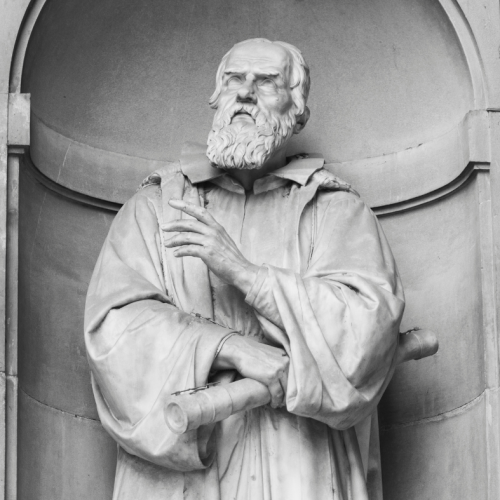
Galileo Galilei: The Revolutionary Thinker Who Shaped My Journey Toward Scientific Truth
Introduction
In an age dominated by dogma, where scientific curiosity was often quashed in the face of religious orthodoxy, Galileo Galilei stood as a beacon of reason, persistence, and intellectual courage. His story is one of profound struggle against the forces of rigid religious thought, which sought to maintain control over knowledge and the very nature of truth. For me, as the founder of the Institute of Black Nobility (IoBN), Galileo’s journey is both deeply inspiring and personally relevant. His resistance to the constraints of his time laid the foundation for my own endeavors to challenge and redefine entrenched narratives-particularly those around cultural dishonesty and the power of DNA sequencing to realign our understanding of human history and identity.
Galileo’s work in astronomy, physics, and mathematics not only revolutionized the scientific world but also sparked a broader philosophical and epistemological shift that continues to reverberate in the present day. Through this essay, I will delve into the remarkable life of Galileo, explore the deep parallels between his intellectual battle and my own journey, and highlight the profound influence he has had on the development of my Atomic Re-alignment Theory, which seeks to use modern science to reconstruct and correct historical, cultural, and genealogical inaccuracies.
The Early Life and Struggles of Galileo
Born in 1564 in Pisa, Italy, Galileo’s intellectual abilities were evident from an early age. He initially studied medicine at the University of Pisa but was soon captivated by mathematics and the natural sciences. This early inclination toward the physical sciences would lay the foundation for his life’s work-an intellectual odyssey that would challenge the very fabric of accepted scientific doctrine.
Galileo’s most famous contributions to science include his advancements in the study of motion, his improvements to the telescope, and his subsequent astronomical observations, which led him to discover the moons of Jupiter, the phases of Venus, and the rugged surface of the Moon. His work directly contradicted the Ptolemaic geocentric model, which placed the Earth at the center of the universe, and instead supported the Copernican heliocentric model, which posited that the Earth and other planets orbited the Sun.
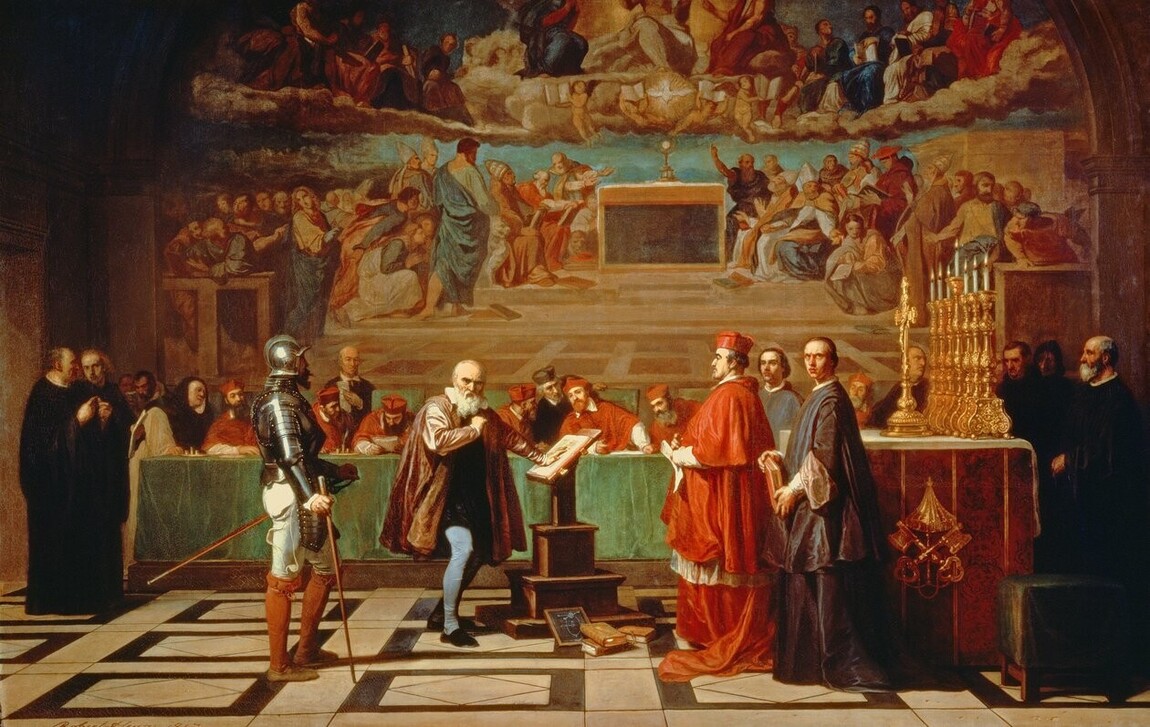
At the time, these discoveries were not just scientific but philosophical and theological. The Catholic Church, wielding immense influence over European thought and intellectual life, held firm to the geocentric model as a divinely ordained truth. In this context, Galileo’s support of the heliocentric theory was perceived as a direct challenge to religious authority-a challenge that would ultimately lead to his infamous trial by the Roman Catholic Inquisition in 1633.
The Battle Against Religious Rigidity
The trial of Galileo, which ended with his conviction of heresy, was not just a personal ordeal but a moment in the larger battle between science and religion, between knowledge and power. Galileo, despite facing threats of torture and excommunication, remained steadfast in his commitment to the truth as he saw it. His Dialogues Concerning Two New Sciences, written in 1638, encapsulates his life's work and ideas, offering an irrefutable defense of the scientific method, the empirical approach, and the pursuit of objective truth.
However, Galileo’s trial and conviction also symbolize a critical moment in the tension between individual intellectual freedom and the monolithic power structures of religious dogma. In many ways, Galileo’s courage to defend reason in the face of overwhelming opposition was the beginning of a new era in which truth would no longer be dictated by religious institutions or state powers but by evidence-based inquiry and scientific investigation.
Galileo's Legacy: Challenging Established Truths
Galileo’s work has left an indelible mark on the world. He was not simply a scientist-he was a pioneer, a revolutionary thinker who overturned centuries of entrenched belief. His method of inquiry, based on observation, experimentation, and reasoning, became the cornerstone of modern science. In his wake, the Scientific Revolution took hold, laying the foundation for figures like Isaac Newton, Kepler, and Einstein, all of whom would continue the work of questioning the limits of human knowledge.
Yet, Galileo’s most important legacy may lie in the way he redefined human perception of the cosmos and our place within it. Before Galileo, humans saw themselves as the central figures in a universe controlled by divine providence. After Galileo, humans began to see themselves as part of a vast, interconnected cosmos governed by physical laws that could be understood through reason and scientific inquiry.
In this way, Galileo was not merely fighting against the forces of religious orthodoxy but also paving the way for a new worldview-one where the human spirit could rise above the limitations of superstition and ignorance and embrace the vast, complex, and dynamic world of science.
Parallels Between Galileo’s Battle and My Own Journey
For me, Galileo’s battle was not just about challenging theological rigidity-it was about standing against the forces of cultural dishonesty that seek to suppress knowledge and suppress the truth about our collective human heritage. In many ways, cultural dishonesty operates much like the religious dogma of Galileo’s time, seeking to control the narrative and rewrite history to serve particular agendas, whether social, political, or racial.
As the founder of the Institute of Black Nobility (IoBN), I am engaged in a similar struggle: a battle to correct historical distortions that have perpetuated centuries of injustice and misrepresentation. At the core of my work is a commitment to the idea that history should be reconstructed based on scientific facts, not cultural assumptions or inherited prejudices. This is where DNA sequencing plays a pivotal role-by using modern genetic science, I aim to retrace the historical and genealogical roots of human civilization, seeking to correct the distortions that have marginalized entire peoples and cultures.
My development of the Atomic Re-alignment Theory is an extension of this commitment to truth. Just as Galileo challenged the established view of the cosmos, I seek to challenge the prevailing historical narrative, particularly when it comes to Black history, the African diaspora, and the role of African civilizations in shaping the modern world. Using genomic sequencing as a tool, I aim to show the deep connections between modern humans and their ancient ancestors, uncovering the truth about human evolution, migration, and ancestral lineages.
The Intersection of Science and Cultural Re-alignment
In the same way that Galileo’s scientific discoveries paved the way for a new era of rational inquiry, my work seeks to challenge the false narratives that have clouded our understanding of Black heritage and history. Through DNA sequencing, I am able to trace the genetic signatures of various ethnic groups and show how these ancient lineages have influenced the global cultural and political landscape.
This effort, which I call atomic realignment, is not simply about correcting historical inaccuracies-it is about forging a new understanding of who we are and where we come from. By combining the power of modern science with the pursuit of truth, I hope to create a world where cultural honesty can finally take root, one where the full spectrum of human identity is understood and celebrated.
The Enduring Spirit of Galileo
Galileo’s legacy lives on - not just in the realm of science, but in the spirit of intellectual rebellion that he embodied. He defied the forces of ignorance and dogma, showing us that the truth is worth fighting for, no matter the consequences. In many ways, Galileo’s journey has inspired mine - to challenge the forces of cultural dishonesty, to correct the distortions of history, and to forge a path toward truth through the power of science and reason.
As the Institute of Black Nobility (IoBN) continues to grow and evolve, I carry Galileo’s legacy with me, embracing the scientific method as a means to re-align human understanding and restore dignity to marginalized histories. Just as Galileo transformed our understanding of the universe, so too do I hope to transform our understanding of human identity, heritage, and truth - one atom at a time.