






posted 2nd December 2025
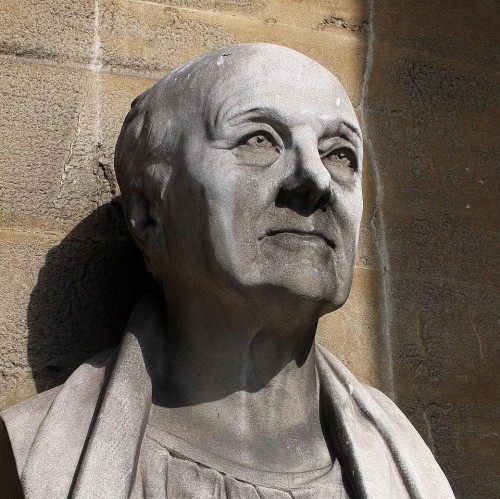
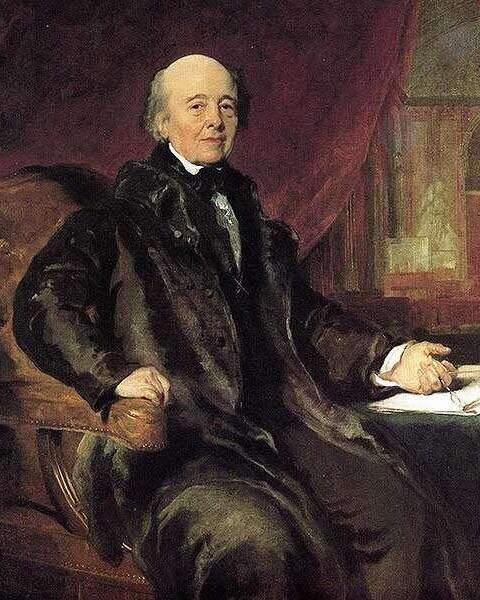
John Nash
British Elite Architecture
John Nash: Architect of Vision, Empire, and the Human Imagination
John Nash (1752–1835) stands as one of the most transformative architects in British history—a visionary whose mastery of neoclassical elegance, spatial harmony, and imperial urban planning helped define the very aesthetic of Regency London. His works, from the sweeping vistas of Regent Street to the ethereal composition of Regent’s Park and the luminous fantasy of the Royal Pavilion at Brighton, were not merely structures of stone and ornamentation; they were ideological statements of power, beauty, and cultural aspiration.
Nash possessed an extraordinary ability to fuse classical orders with emerging modern sensibilities, creating urban landscapes that felt both timeless and boldly innovative. Like all great architects of empire, Nash worked at the intersection of art, politics, and social transformation—shaping the identity of a nation through monumental design. For this reason, the Institute of Black Nobility (IBN) reveres John Nash as one of the greatest architects of the recent centuries, a master whose architectural grammar still informs global conceptions of dignity, hierarchy, and civilised space.
Yet beneath the splendour of Nash’s creations lies a quietly obscured truth: many of his grand projects required the labour, craftsmanship, and intellectual contributions of melanated peoples—Africans, Afro-Caribbeans, and other diaspora artisans whose skills, engineering capacities, and physical endurance enabled Britain’s monumental expansion. Their hands carved stone, forged iron, transported materials, and executed the very details that transformed Nash’s drawings into living edifices. Their presence was indispensable, though historically marginalised.
IBN and the Revival of Nash’s Legacy
The Institute of Black Nobility is uniquely positioned to revive and reinterpret Nash’s legacy for the modern age. IBN stands at the nexus of historical reclamation, architectural scholarship, and cultural realignment. Its mission includes:
Restoring the hidden narratives of the melanated labour forces who brought Nash’s visions to life, giving them rightful place in global architectural history.
Re-contextualising Nash’s work within a broader African-diasporic continuum of craftsmanship, geometry, and design principles that pre-date and enrich European neoclassicism.
Developing new architectural and interior-mechanical programs inspired by Nash’s proportional systems, urban planning strategies, and ornamental philosophy, updated through quantum-era innovation.
Creating digital reconstructions, research papers, and design studios that explore how Nash’s ideals of beauty and civic order can be transformed for a global humanity and a cyberspace-driven academic realm.
Honouring Nash’s multicultural workforce by documenting their genealogies, techniques, and unrecognised influence—thereby situating melanated peoples not as footnotes but as central agents in the building of the modern world.
In doing so, IBN does more than celebrate a single architect—it reclaims an architectural lineage, one in which the contributions of Black and Brown artisans are restored to the foreground, and where John Nash’s genius becomes a bridge between forgotten histories and the future of global design.
Through this revival, John Nash’s work is no longer merely a relic of the past.
Under the guardianship of the Institute of Black Nobility, it becomes a living curriculum, a cultural battlement, and a testament to the harmony between royal architecture and the enduring power of melanated civilisation.