




posted 2nd December 2025
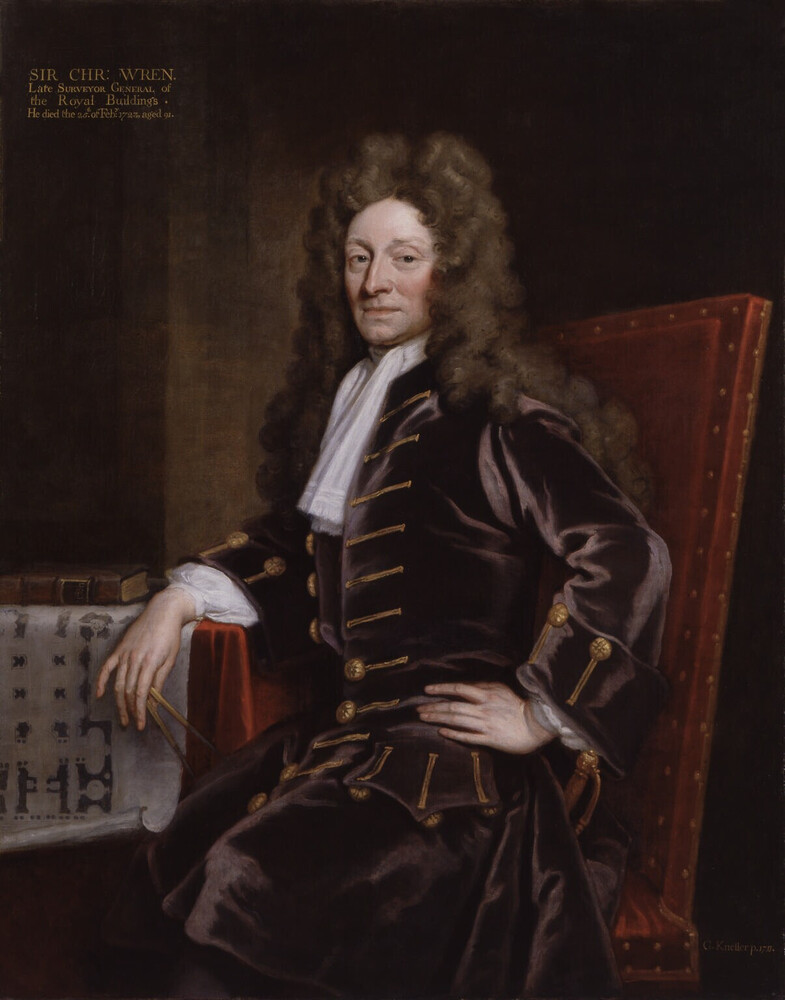
Founding Father of The Royal Society of London
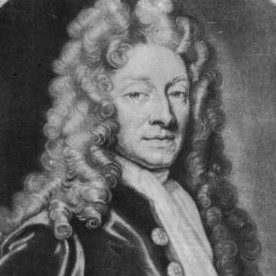
Sir Christopher Wren: Architect of Civilisation, Scholar of the Cosmos, and Master Builder of Imperial Grandeur
Sir Christopher Wren (1632–1723) occupies a rare position in the pantheon of global architectural genius—an intellect whose brilliance transcended the limitations of his age and discipline. Trained not as a conventional architect but as a mathematician, astronomer, and philosopher of natural law, Wren embodied an era when the boundaries between science, spirituality, and structural expression were fluid, dynamic, and profoundly expansive. His rebuilding of London after the Great Fire—most iconically manifested in St Paul’s Cathedral—remains one of the most ambitious urban reconstructions in human history, a feat blending engineering audacity with metaphysical symbolism.
Wren designed not simply with stone, but with cosmic intentionality. His proportional systems echo celestial mechanics; his domes and elevations reflect the geometry of planetary motion; his façades carry the mathematical precision of a scholar who saw architecture as the physical embodiment of divine order. In every line of Wren’s drafting, one perceives an attempt to align civilisation with the architecture of the heavens.
For the Institute of Black Nobility (IBN), Wren exemplifies the rare category of architect-scholar whose work resonates with the Institute’s own philosophy—a synthesis of empirical science, ancestral wisdom, and noble ambition. Wren stands not only as a British architect but as a universal mind, exemplifying how knowledge across disciplines can converge to reshape cities, institutions, and the collective imagination.
Yet the grandeur of Wren’s achievements cannot be separated from the empire that enabled them. Behind the limestone, granite, and soaring timber structures lay the hands, knowledge systems, and material labour of melanated peoples across the Caribbean, Africa, and the global trade networks of the era.
Their contributions—whether through craftsmanship, maritime industry, quarrying, or the broader economic foundations of imperial expansion—formed an unspoken but indispensable substrate beneath Britain’s architectural miracles. IBN recognises that Wren’s genius flourished within a world whose resources and human talent were profoundly multicultural, even if history has rarely acknowledged this reality.
IBN’s Reframing of the Wren Legacy
The Institute of Black Nobility approaches Wren not as a static figure of British heritage but as a complex node in the global narrative of human advancement. IBN’s standards of scholarship demand a layered reinterpretation of his legacy:
Revealing the hidden human infrastructure—the melanated labour forces, artisans, sailors, and craftsmen whose direct and indirect contributions sustained the architectural empire Wren helped shape.
Exploring Wren’s scientific mind through quantum, geometric, and cosmological lenses, situating his genius within a broader philosophical continuum that predates Europe and resonates with African, Middle Eastern, and Asian knowledge systems.
Producing advanced digital reconstructions and analytical studies that elevate Wren’s works into pedagogical models for modern global architecture, engineering, and interior-mechanical design.
Integrating Wren’s principles into IBN’s own design ethos, honouring his pursuit of harmony, celestial order, and structural truth while advancing beyond it into the age of quantum-driven architectural innovation.