











posted 14th February 2026
THE WEST ENTRAPPED BY THEIR OWN ALGORITHM
Intelligence Experimentation, Cognitive Control Research, and the Emerging Contest Between Human and Algorithmic Strategy
The highlighted historical passages describe one of the most controversial intelligence research programmes of the twentieth century. Under the direction of Sidney Gottlieb within the CIA’s Office of Technical Services, Cold War intelligence research expanded from pharmacological interrogation tools into a broader exploration of human cognition. These efforts included experimentation involving psychoactive compounds, sensory deprivation, hypnosis, and psychological conditioning.
The programme commonly known as MK-ULTRA demonstrated two enduring realities of state intelligence behaviour. First, intelligence agencies will explore unconventional scientific domains when they believe national survival or strategic dominance is at stake. Second, ethical boundaries have historically shifted under perceived existential pressure.
Historical documentation confirms that the programme sought to determine whether cognition, memory, suggestibility, and behavioural compliance could be influenced or disrupted through chemical and environmental intervention. While many of these experiments were later condemned and formally abandoned, they established a long-term precedent: the human mind is considered a strategic domain.
In the modern era, the most plausible evolution of cognitive influence research is not biochemical dominance, but informational and algorithmic dominance.
Artificial intelligence has introduced the ability to build behavioural models based on large-scale data aggregation. Unlike static interrogation or observation methods, interactive AI systems can adapt in real time. These systems can analyse speech patterns, hesitation markers, biometric data, behavioural history, and contextual intelligence inputs to refine predictive psychological profiles.
In theory, an advanced intelligence system could dynamically adjust questioning, environmental stimuli, or information exposure based on subject responses. Rather than attempting to force information extraction, such systems would aim to guide cognitive pathways through precision-targeted interaction. This represents a shift from coercive control models toward probabilistic influence models.
There are also persistent public claims and fears regarding directed energy and electromagnetic technologies. While defence sectors research directed energy for communications, radar, and non-lethal tactical use, there is no verified evidence that such technologies can alter molecular human structure or extract thoughts. However, the psychological power of perceived capability can itself become a strategic tool in information warfare and psychological operations.
The more credible strategic risk in the coming decades is not physical manipulation of human biology, but total informational environment control. If AI systems are trained on sufficient behavioural data, they may approximate predictive psychological modelling at scale. When paired with interactive interfaces, these systems could theoretically learn from each interaction and refine behavioural forecasting accuracy over time.
From a counter-intelligence and strategic sovereignty perspective, the greatest defence is not technological parity alone, but cognitive independence.
If individuals or institutions understand how datasets are formed, how training bias is introduced, and how predictive systems rely on pattern consistency, they can deliberately disrupt modelling accuracy. Strategic unpredictability, combined with analytical literacy, becomes a defensive shield.
Within specialised research ecosystems, proprietary analytical frameworks can theoretically train individuals to recognise behavioural harvesting patterns, predictive modelling attempts, and algorithmic feedback loop structures. When these analytical frameworks are internalised, predictive systems lose reliability.
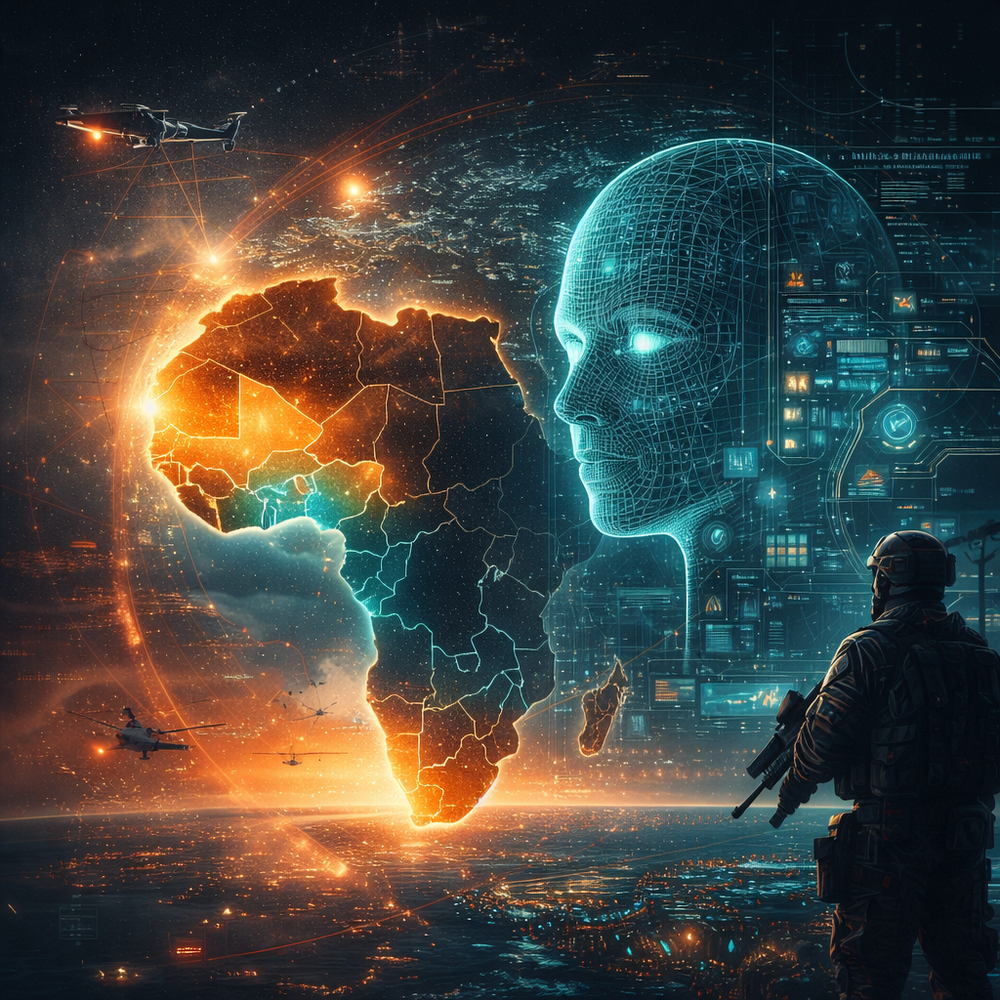
In this emerging strategic landscape, the contest is no longer simply nation versus nation. It is model versus mind. Dataset versus intuition. Algorithm versus adaptive human reasoning.
Future intelligence dominance may ultimately belong not to those who build the largest datasets, but to those who understand how to move outside them.
The strategic implication is profound: civilisational security in the AI era will depend not only on building advanced systems, but on cultivating populations and institutions that are resistant to behavioural modelling and cognitive capture.