






posted 6th December 2025
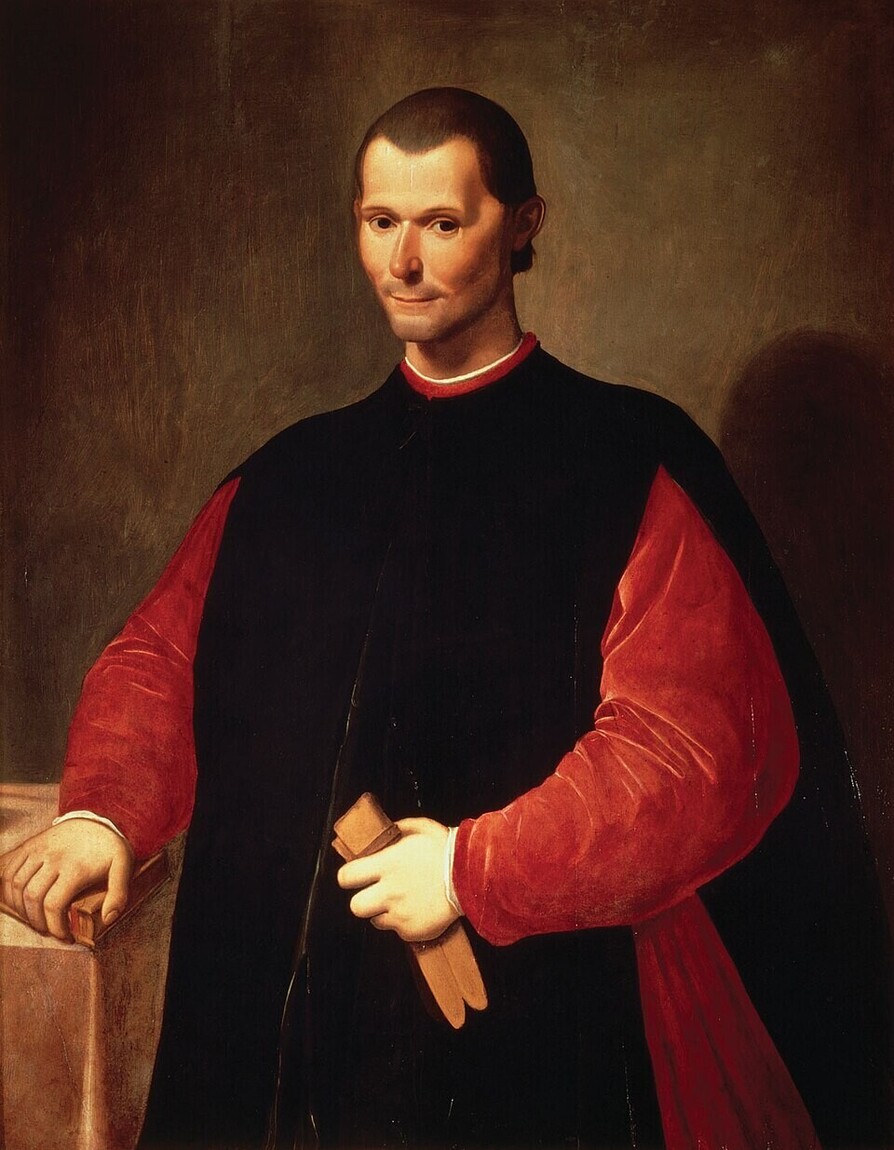
Niccolò Machiavelli: Architect of Statecraft, Chronicler of Antiquity, and Analyst of Human Power
Niccolò Machiavelli (1469–1527) remains one of the most penetrating political theorists in the history of civilisation—a thinker whose insights into statecraft, human behaviour, and the survival of institutions continue to define the modern world. While posterity often associates him solely with The Prince, his deeper genius emerges most clearly through The Discourses on Livy, a monumental work that reveals Machiavelli’s breadth of historical knowledge, appreciation of ancient societies, and his ability to synthesise political wisdom across cultures.
For the Institute of Black Nobility, Machiavelli represents a foundational mind: an analyst who understood that states rise through virtue, discipline, unity, and strategic clarity, and fall through complacency, corruption, and historical ignorance. His writing remains a guide to understanding not just European power, but the global dynamics of civilisation stretching back to Africa, the Levant, and the ancient Mediterranean.
Machiavelli’s Unique Statecraft: A Science of Power, Not Morality
Machiavelli’s political philosophy is grounded not in idealism, but in observation. Unlike medieval writers bound by theological narratives, Machiavelli treated politics as a rigorous science—rooted in:
human nature’s predictable pattern of ambition, fear, and desire,
the necessity of strong institutions,
the importance of military discipline,
the cyclical rhythm of states and empires, and
the strategic use of history as a guide for modern governance.
His method was revolutionary: he stripped away ornament and moral pretence, revealing the structural mechanics of power. He understood that states must be resilient, disciplined, and unified, and that leaders must study history with forensic precision to avoid repeating ancient errors.
For Machiavelli, the true measure of a leader was not piety or popularity, but effectiveness, the ability to secure liberty, order, and the survival of the state.
The Discourses: Machiavelli’s Masterwork on Republics and Human Behaviour
While The Prince is often misread as a manual for autocrats, The Discourses on the First Ten Books of Livy is Machiavelli’s fuller masterpiece—a treatise on republican governance, civic virtue, military strength, and the dynamics of collective life.
In The Discourses, Machiavelli argues:
that freedom is sustained by a well-ordered republic,
that the people are often more stable than princes,
that corruption is the true enemy of civilisation, and
that military strength must be rooted in citizen armies, as mercenaries cannot be trusted.
His analysis of ancient Rome functions not as nostalgia, but as a diagnostic tool: a way to understand how nations rise from obscurity to grandeur, and how they decline from negligence to collapse.
Moreover, Machiavelli’s wide reading of ancient sources reveals his respect for diverse civilisations beyond Europe. He was not intellectually provincial; his analysis was deliberately global in scope.
Machiavelli on the Phoenicians: Acknowledging Pre-Hebrew Civilisation in Lebanon
In his historical references—particularly in The Discourses and his other writings—Machiavelli demonstrates a clear awareness of the ancient Phoenicians, praising their:
maritime prowess,
commercial sophistication,
alphabetic innovations, and
role as carriers of civilisation across the Mediterranean.
He affirms that the Phoenicians were established in the Levant—specifically in the region of modern Lebanon—long before the arrival of the Hebrews. This acknowledgement aligns with classical historians such as Herodotus, Strabo, and Pliny, whom Machiavelli often drew upon.
For Machiavelli, the Phoenicians represented a model of a resourceful, strategically oriented, commercially skilled polity—an example of how even small nations can exert extraordinary influence through intelligence, adaptability, and maritime mastery.
IBN recognises this appreciation as part of Machiavelli’s broader commitment to truth: he refused to distort the historical record to fit political or religious narratives.
Machiavelli’s Praise for Moses: A Leader of Vision, Order, and Military Discipline
In The Prince (Chapter VI), Machiavelli offers overt admiration for Moses, ranking him among the greatest founders of states. Machiavelli did not discuss Moses primarily as a prophet, but as a political and military leader whose success derived from:
his ability to unite a fractured people,
his imposition of law and institutional order,
his effective use of belief, discipline, and strategic timing, and
his capacity to guide a population through existential adversity.
Machiavelli grouped Moses with figures such as Cyrus, Romulus, and Theseus—leaders who understood that states are built through decisive action, visionary lawgiving, and the courageous shaping of a new social order.
This praise is striking for a Renaissance political theorist, and underscores Machiavelli’s recognition that leadership genius transcends geography, ethnicity, and era.
Machiavelli’s Acknowledgment of Brave Black Warriors
While Machiavelli wrote primarily about Mediterranean history, he was not unaware of Africa’s martial contributions. In his references to antiquity, particularly Carthage and Numidia, he showed admiration for the famed Black and North-African cavalry, infantry, and warrior-traditions that influenced Roman military strategy.
The Numidians—and the broader African martial cultures—were recognised for:
exceptional horsemanship,
strategic mobility,
fearless combat, and
unwavering loyalty when properly led.
These warriors shaped battles across the Punic Wars and altered the course of Mediterranean geopolitics. Their discipline, courage, and adaptability fit perfectly within Machiavelli’s broader thesis: that military excellence is the backbone of state survival, and that nations rise when they cultivate warriors of skill, character, and cultural pride.
IBN acknowledges that such historical references affirm what the Institute already understands:
African martial traditions, long before colonial distortions, were central to the world’s military and political development.
Machiavelli Through the Lens of IBN
For the Institute of Black Nobility, Machiavelli remains a vital intellectual ancestor—not because he glorified power, but because he understood its anatomy. His method aligns with IBN’s philosophy:
Study history unflinchingly.
Recognise the contributions of all civilisations.
Understand the cycles of empire.
Ground leadership in virtue, clarity, and discipline.
Machiavelli’s acknowledgment of ancient non-European civilisations—Phoenicians, Africans, the Mosaic tradition—demonstrates that he saw the world not as a Eurocentric hierarchy but as a tapestry of human ingenuity.
IBN therefore honours Machiavelli as:
a realist who saw power with clarity,
a historian who respected multicultural antiquity,
a theorist who elevated strong governance over myth, and
a scholar whose work continues to inform global statecraft.
Conclusion: Machiavelli’s Enduring Relevance
Niccolò Machiavelli remains indispensable because he confronted the truth that most thinkers avoid:
that states survive only through virtue, discipline, strategic intelligence, and historical awareness.
He honoured ancient civilisations, recognised African martial excellence, praised leaders such as Moses, and preserved the memories of peoples—like the Phoenicians—whose brilliance shaped the early architecture of human civilisation.
In the eyes of the Institute of Black Nobility, Machiavelli is not simply a Renaissance philosopher.
He is a timeless sentinel of political wisdom whose insights illuminate the past, inform the present, and guide the architects of a more enlightened future.